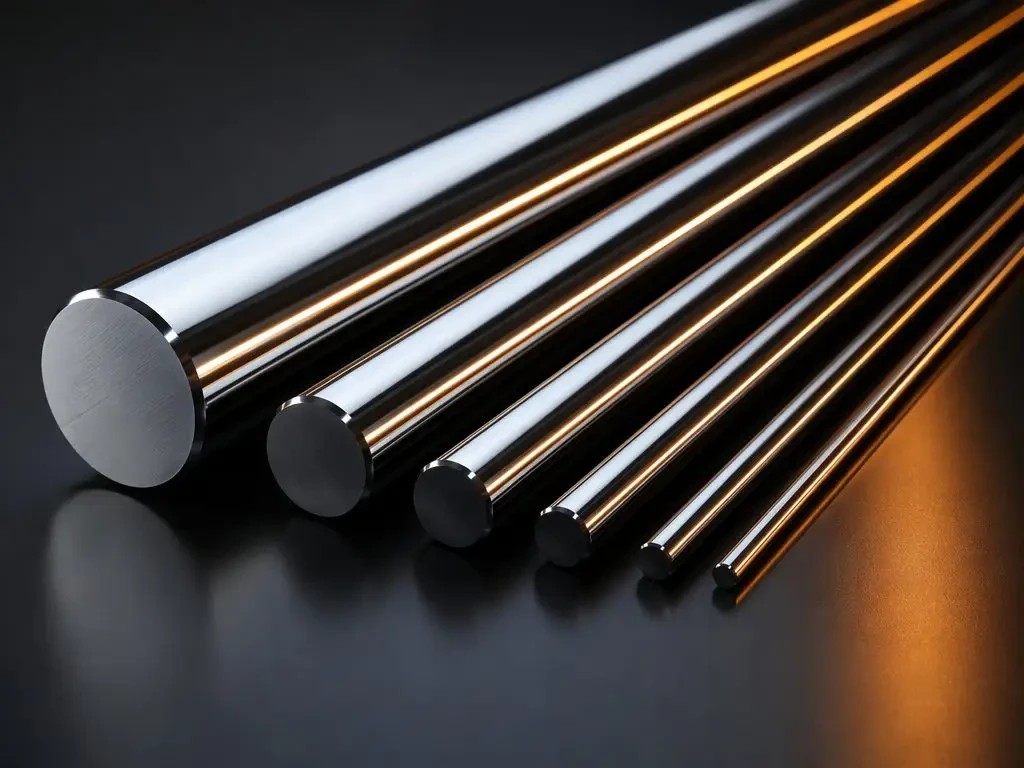
The linear shaft is the least glamorous component in the axis and the one that decides how long everything else lasts. Diameter sets stiffness, material sets wear and corrosion life, and surface finish sets how kindly the shaft treats the bushing running on it.
Match the shaft to the job
Small desktop equipment — 3D printers, plotters, lab automation — runs 6–12 mm hardened shafts. General factory automation steps up to 16–25 mm, while heavy transfer and press equipment uses 30 mm and above. When a long shaft would sag between end supports, the answer is not a thicker shaft but a supported rail: SBR systems support the shaft along its full length.
- Chrome plated C45 — general automation, humid environments
- Hardened GCr15 — high-cycle, heavy-load machine axes
- Stainless SUS440C — food, medical, washdown equipment
- Machined to drawing — journals, threads, keyways ready to assemble
Surface treatment is corrosion strategy
Hard chrome plating adds a corrosion barrier over a hardened core and is the cost-effective choice for most factories. Full stainless construction costs more but survives washdown chemistry that eventually penetrates chrome. Choose by environment, not by habit.
YZXQ cuts shafts to length, chamfers ends and machines features to drawing — threads, flats, keyways, cross holes — with rust-proof export packing for sea freight.
Send Your Model List — Get a Factory Quote from Our Factory Team
Share your models, quantities and destination port. Our export team replies with pricing, lead time and freight options.